
Choosing the Most Suitable Laser for Your Skin and Hair
Not all skin types, hair colours and hair characteristics respond equally to different laser technologies.
The effectiveness and safety of laser hair removal depend on several factors, particularly your natural skin colour, hair colour, hair thickness and the wavelength used.
At DermaHealth, we use the new-generation German MeDioStar® by Asclepion, featuring advanced dual-wavelength technology (810 + 940 nm) and the innovative Monolith handpiece system.
This advanced system is particularly well suited to Middle Eastern and Mediterranean skin types, making it an excellent choice for the majority of our patients.
Understanding the differences between laser wavelengths helps explain why certain technologies are more suitable for particular skin and hair combinations.
Which Laser Wavelength Is Best for Different Skin Types?
Different laser wavelengths penetrate the skin to different depths and are absorbed differently by melanin, the natural pigment responsible for skin and hair colour.
Selecting the appropriate wavelength is essential for achieving effective hair reduction while minimising the risk of burns and pigmentation changes.
1. Middle Eastern and Mediterranean Skin
810 + 940 nm: Dual-Wavelength Technology
The 810 nm wavelength offers an excellent balance between melanin absorption and penetration depth, making it particularly suitable for a broad range of skin types, including Mediterranean skin.
The new-generation MeDioStar® by Asclepion (Germany) combines 810 and 940 nm wavelengths with advanced treatment and cooling technologies.
Its main features include:
- Dual-wavelength technology (810 + 940 nm).
- Large treatment spot of up to 10 cm² with the Monolith XL handpiece.
- Laser output of up to 5,000 watts.
- Advanced 360° contact cooling system.
- Shorter pulse durations and improved treatment capabilities.
- Ergonomic handpieces designed for efficient treatment of different body areas.
These features allow effective heating of the hair follicles while helping protect the surrounding skin and improving treatment comfort.
2. Fair and North European Skin
755 nm: Alexandrite Lasers
The shorter wavelength is particularly effective for fair this skin type.
Examples include:
- Candela GentleLase Pro.
- MeDioStar Alex.
However, because epidermal melanin also absorbs this wavelength, Alexandrite lasers require greater caution when treating darker or recently tanned skin.
3. Very Dark Skin (Fitzpatrick Types V–VI)
1064 nm: Nd Lasers
For very dark skin, long-pulsed Nd lasers are generally considered the preferred option.
Their longer wavelength is less strongly absorbed by epidermal melanin, reducing the risk of excessive skin heating while allowing energy to reach deeper hair follicles.
Examples include Fotona Nd and GenlteYag 1064 nm laser systems.
The 810 nm wavelength can also be used in selected darker skin types with appropriate patient selection and carefully adjusted treatment parameters. However, Nd generally offers a more favourable safety profile for very dark skin.
4. Very Light, Blonde, Red, Grey or White Hair
Conventional laser hair removal relies on melanin in the hair follicle to absorb laser energy.
Consequently:
- Dark brown and black hair generally respond best.
- Light blonde and red hair respond less predictably.
- Grey and white hair contain little or no melanin and generally do not respond effectively.
For these hair colours, electrolysis may be a more suitable alternative.
What Are the Differences Between Laser Machines?
Several technical factors determine the performance of a laser hair removal system.
1. Wavelength
Wavelength is one of the most important factors determining suitability for different skin types.
755 nm – Alexandrite
Particularly suitable for fair skin.
810 nm – Diode
Suitable for a broad range of skin types, including Middle Eastern and Mediterranean skin.
940 nm – Diode
Used in combination with other wavelengths in advanced dual-wavelength systems.
1064 nm – Nd
Particularly suitable for very dark skin types because of its lower absorption by epidermal melanin.
Longer wavelengths generally penetrate more deeply and are less strongly absorbed by epidermal melanin. This is particularly important when treating darker skin.
2. Spot Size and Treatment Speed
Spot size refers to the area covered by each laser pulse.
A larger treatment spot generally allows faster coverage of extensive body areas, such as the legs, back and arms.
The new-generation MeDioStar features the innovative Monolith handpiece system, offering different treatment spot sizes:
- Monolith S: 1 cm².
- Monolith M: 1.5 cm².
- Monolith L: 3 cm².
- Monolith XL: 10 cm².
The XL handpiece, with laser output of up to 5,000 watts, is particularly useful for rapid treatment of large body areas.
Actual treatment time also depends on the selected treatment parameters, repetition rate and size of the area being treated.
3. Cooling Technology and Safety
Cooling is an essential component of modern laser hair removal.
During treatment, laser energy heats the hair follicle. Some of this heat may also affect the surrounding epidermis, particularly in darker skin.
The new-generation MeDioStar features an advanced 360° contact cooling system integrated into its Monolith handpieces.
This technology:
- Helps protect the epidermis during treatment.
- Reduces discomfort and excessive surface heating.
- Improves treatment tolerance.
- Facilitates treatment in different directions.
Nevertheless, no laser is completely free of risks. Appropriate patient selection, treatment parameters and medical supervision remain essential.
4. Power and Pulse Duration
Laser power and pulse duration influence how energy is delivered to the hair follicle.
The new-generation MeDioStar features powerful laser modules and shorter pulse durations compared with its predecessor.
Together with its large treatment spots and advanced cooling, these developments allow faster and more efficient treatment.
However, higher power does not automatically mean better results. The appropriate energy and pulse duration must be selected according to the patient’s skin type, hair characteristics and treatment area.
5. Treatment Comfort
Comfort depends on several factors, including wavelength, spot size, pulse duration, energy settings and cooling technology.
The MeDioStar’s large treatment spot and integrated 360° cooling system are designed to improve patient comfort while maintaining effective follicular heating.
Individual experiences vary, and some areas of the body are naturally more sensitive than others.
Why We Use the New-Generation MeDioStar at DermaHealth
We believe that choosing the right laser technology is more important than simply offering multiple machines.
Our new-generation German MeDioStar combines:
- Advanced dual-wavelength technology (810 + 940 nm).
- Large treatment spots, up to 10 cm².
- Powerful laser output, up to 5,000 watts with the XL handpiece.
- Innovative 360° contact cooling.
- Advanced treatment capabilities and improved ergonomics.
It is particularly well suited to the skin types and hair characteristics commonly encountered in our Middle Eastern and Mediterranean patients.
At DermaHealth, we believe that successful laser hair removal depends on three essential elements:
The right technology. The right treatment settings. Experienced medical supervision.
Your doctor will assess your suitability and determine the most appropriate treatment approach before starting your sessions.
The right laser, in the right hands, makes all the difference.
Nd Yag - Fotona
Mediostar Pro XL
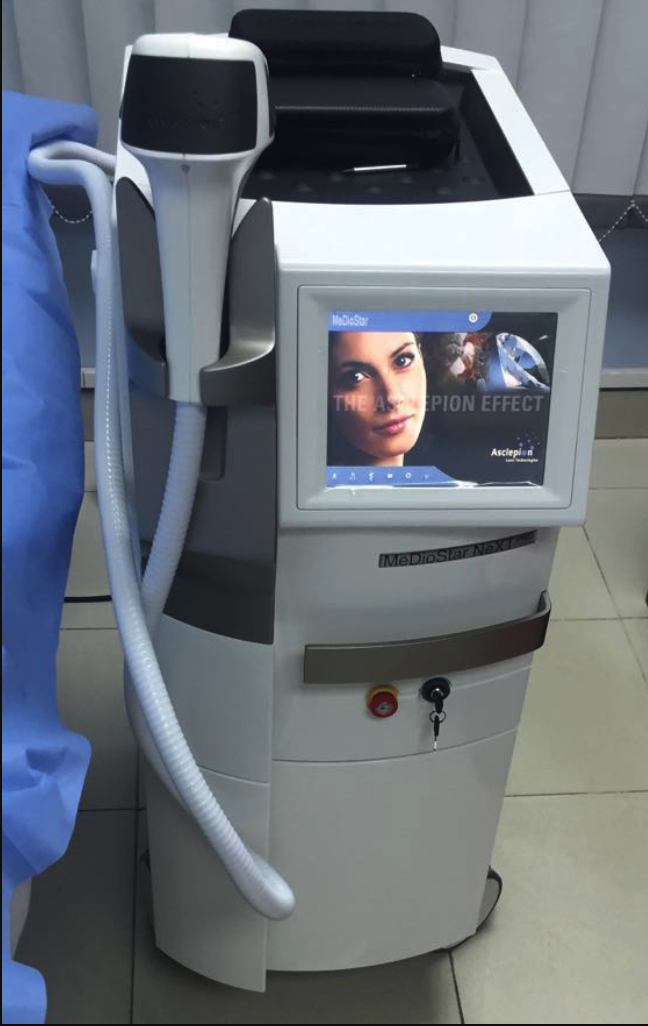
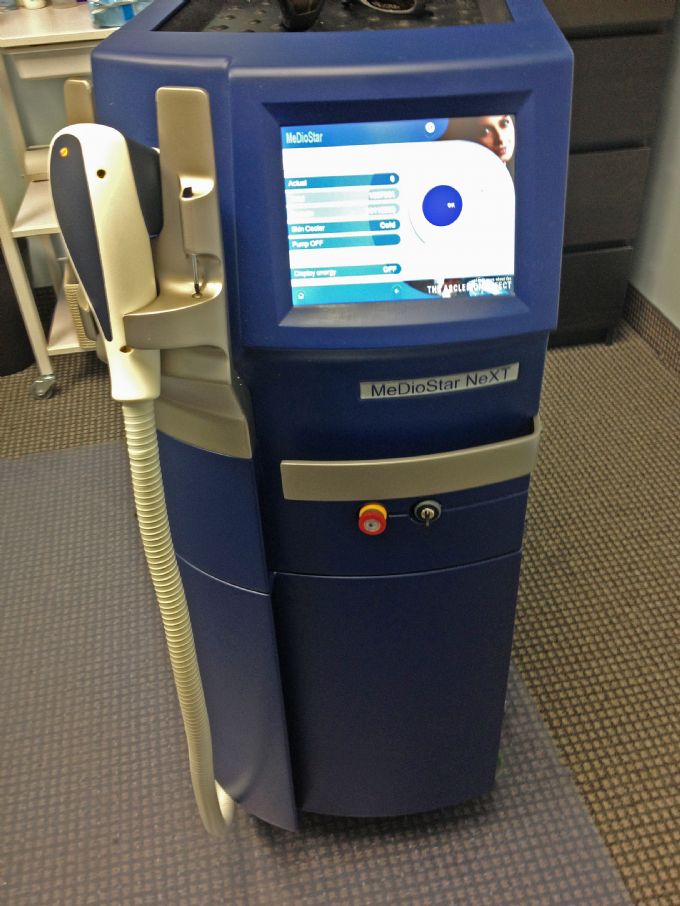
Mediostar Next
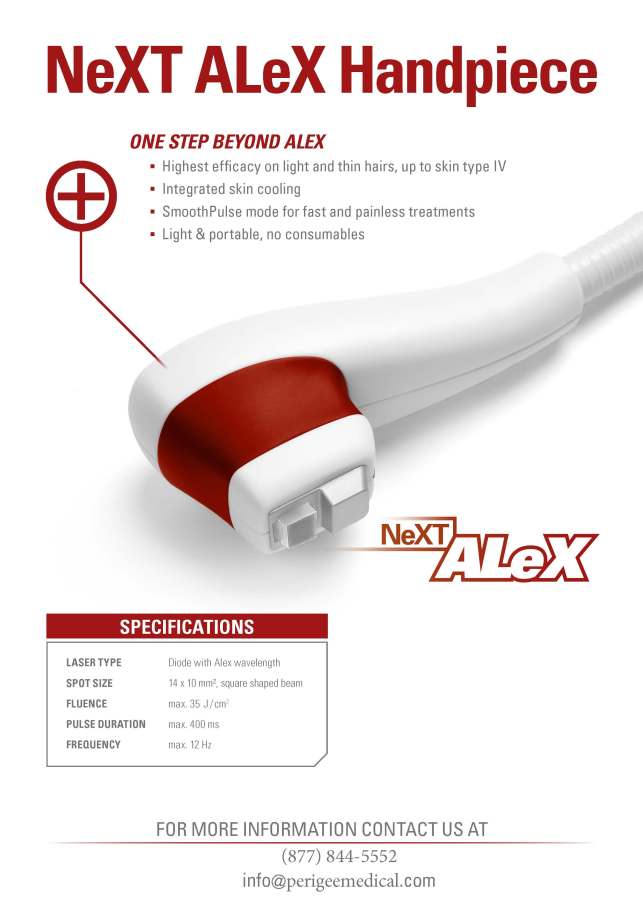
Mediostar Alex
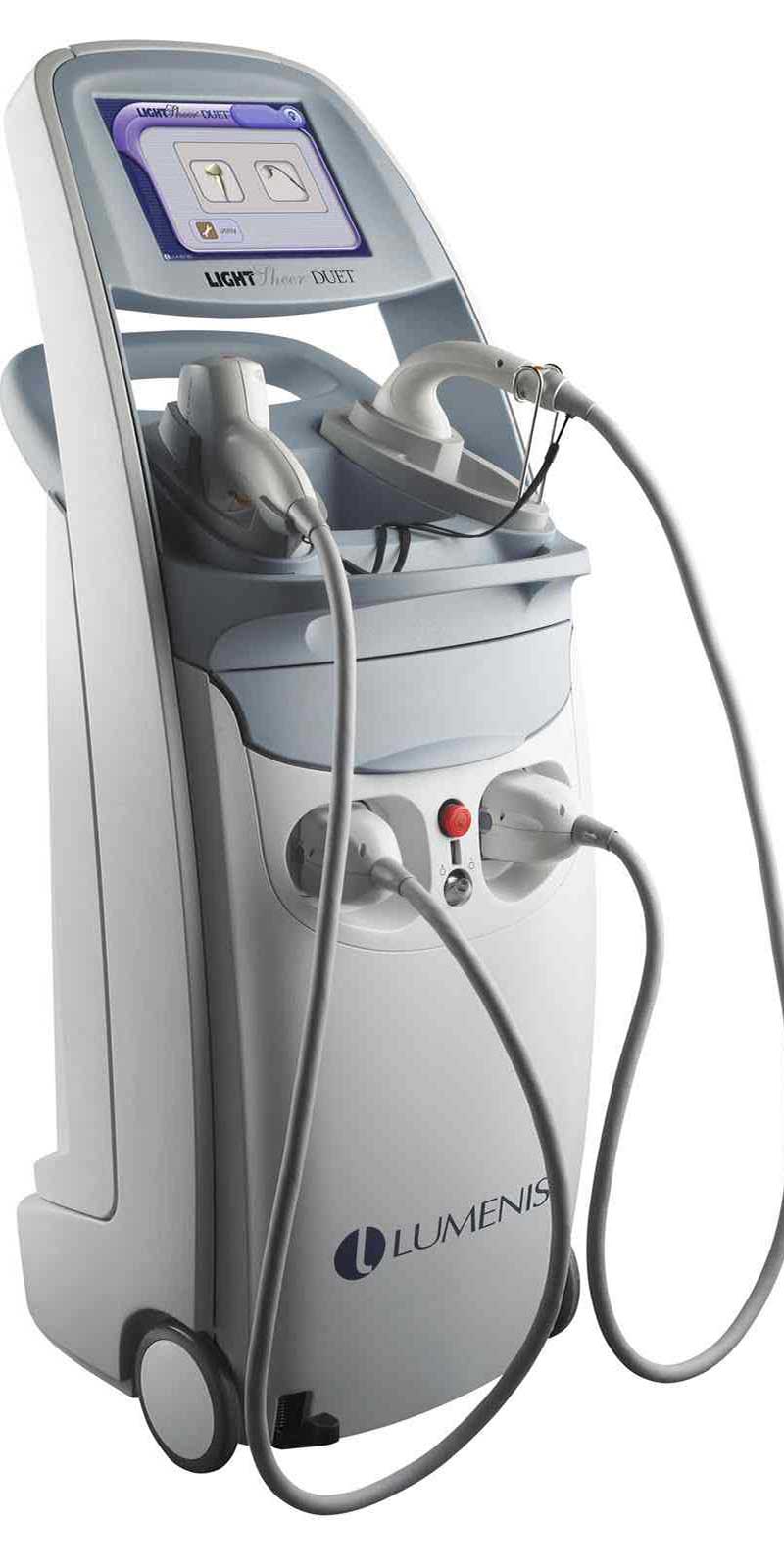
LightSheer Duet